Da indossare con fierezza
Intervista a Sophie Mayanne
Sophie Mayanne è una giovane fotografa londinese che sta realizzando un progetto fonte di grande ispirazione: Behind The Scars, una serie di ritratti che celebrano la bellezza e la unicità delle cicatrici. Dietro ad ogni storia c’è un cammino di accettazione, lotta, sopravvivenza ed è luminoso farne parte.
Sophie, che cos’è per te una cicatrice?
Una cicatrice significa molte cose: forza, determinazione, bellezza e resilienza.
Sophie, what is a scar for you?
A scar is many things – it is strength, determination, beauty and resilience.
Quando e come è nata l’idea di “Behind the scars”?
Behind the scars è nata come una piccola serie poi è cresciuta sino a diventare un progetto più ampio. Ho già fotografato circa 300 persone e ho in programma di fotografare ancora per mesi qui a Londra: il mio obiettivo è di arrivare a fotografare 1000 persone.
When and how the idea of Behind the scars was born?
Behind The Scars started as a small editorial series, and from there has grown into a larger project. I’ve currently photographed around 300 people. I now hold monthly shoot dates in London, and I’m aiming to photograph 1,000 people in total.
Credi che le persone si sentano meglio raccontando le storie delle loro cicatrici?
Alcune persone trovano questo percorso terapeutico, per altri è ancora difficile trasformare le loro cicatrici in un testo scritto. Alcuni non hanno mai elaborato prima quello che hanno passato, quindi a volte può essere uno shock, o una bellissima esperienza, o altre volte può portare molte lacrime!
Do you think people feel better telling their scars stories?
Some people find the process therapeutic – others still find it difficult to relive their scars in written form. Some people haven’t ever written down how they feel before – so sometimes it can be a shock, sometimes it can be beautiful – and other times it can bring tears!
Possiamo dire che si tratta di una forma di resilienza?
Lo è. Credo che sia incredibile cosa possano passare e sopportare sia la mente che il corpo umano. Ma anche cosa sia possibile superare e imparare da queste esperienze.
Is this a sort of resilience?
There is. I think it’s incredible what both the human mind and body can experience, overcome and learn from.
Ogni foto è completata dalle storie personali delle protagoniste. Le parole riescono a completare l’immagine nel processo narrativo?
È molto importante avere le storie accanto alle immagini per poter permettere allo spettatore una comprensione più profonda.
Each photo is linked with the personal story of the protagonist. Words complete the image in the narration?
It’s really important to have the stories alongside the images – as it gives the viewer a deeper understanding.
La fotografia può essere usata come terapia contro gli stereotipi della bellezza?
La fotografia può essere utilizzata per sfidarli e anche per rovesciare gli stereotipi attuali.
Photography can be used as therapy against the current beauty stereotypes?
Photographer can be used to challenge, and eventually overthrow current beauty ideals.
C’è una esposizione di queste foto o è in programma per il futuro?
La serie è ancora in piena realizzazione e spero che ci saranno molte altre esposizioni in futuro e anche molti nuovi appuntamenti in cui fotografare persone in altri Paesi.
There is an ongoing exposition of this series or is planned for the future?
The series is very much on-going, and I will hopefully hold more exhibitions, and events in the future – as well as shoot dates in other countries.
Potete vedere altre storie del progetto #behindthescars sul suo profilo Instagram https://www.instagram.com/behindthescars_/
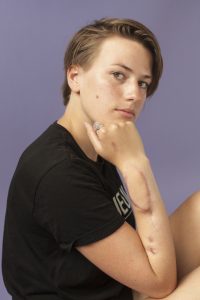
ADELE:
“Nel 2014 mi è stato diagnosticato un sarcoma di Ewings, un cancro alle ossa. Ho fatto la chemio per quasi un anno e diversi trapianti di ossa nel braccio. Hanno preso pezzi di ossa dalla gamba e dalla coscia. Una volta, l’osso che mi avevano trapiantato si è rotto e ho subito un intervento chirurgico di 8 ore. In due anni ho avuto 10 interventi.”
“In 2014, I was diagnosed with Ewings Sarcoma, a bone cancer. I had chemo for nearly a year and several surgeries for bone transplantations in my arm. They took pieces of bone from my leg and thigh. One time, my transplant broke, so I had a major surgery which took 8 hours. In two years I had 10 surgeries.”
BARBARA:
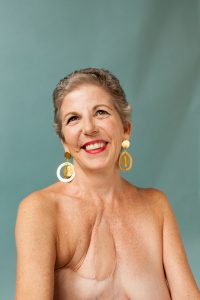
“Nel 2014 mi è stato diagnosticato un angiosarcoma del seno, un tumore raro e aggressivo. Tre interventi chirurgici e due trattamenti di chemioterapia mi hanno lasciato queste cicatrici. La mia ultima operazione è stata un intervento innovativo che ha comportato la rimozione del mio sterno e di quattro costole, sostituite da cemento chirurgico, muscoli presi dalla mia schiena e un trapianto di pelle. Mi ci è voluto molto tempo per abbracciare finalmente le mie cicatrici. Documentano il mio viaggio e il coraggio e la forza che non pensavo di avere. Recentemente mi è stato detto che il cancro è tornato. Sorprendentemente mi sento in pace. ”
“In 2014 I was diagnosed with angiosarcoma of the breast, a rare and aggressive cancer. Three surgeries and two chemotherapy treatments later these are the scars I bear. My recent operation was an innovative surgery which involved removal of my sternum and four ribs, which were replaced by surgical cement, muscle from my back and a skin graft. It took me a long time to finally embrace my scars. They document my journey and the courage and strength I did not think I had. Recently I was told the cancer had returned. Surprisingly I feel at peace.”
CHLOE:
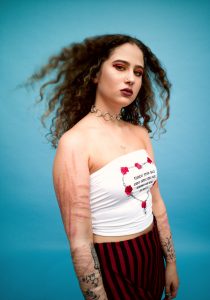
“Ho iniziato a farmi del male quando avevo 13 anni e da allora ho sempre lottato con questo problema. L’autolesionismo peggiora progressivamente e finisci per fare sempre più danni a te stessa di quanto pensi sia possibile all’inizio. È davvero una dipendenza e arrivi ad un punto in cui i chirurghi ti dicono che la chirurgia plastica non può migliorare l’aspetto delle cicatrici, quindi l’unica cosa che puoi fare è amare le tue cicatrici così tanto che tutte le connessioni negative che le hanno causate e l’autolesionismo stesso scompaiono lentamente – insieme a tutto il dolore.
Le mie cicatrici raccontano la mia storia e non lascerò mai che i pensieri o le opinioni degli altri cambino questo.”
“I started self harming when I was 13 and have struggled with it ever since. The issue with self harming is it gets progressively worse and you end up doing more and more damage to yourself than you think is possible when you first start. It truly is an addiction and you get to a point where surgeons tell you that plastic surgery can’t fix the appearance of the scars, so the only thing you can do is love your scars so much that all the negative connections that come along with self harm slowly disappear – along with all the pain attached to the scars.
My scars tell my story, and I’m never going to let anyone else’s thoughts or opinions change that.”
Pictures are courtesy of the artist Sophie Mayanne